Statehood in 1995
South Queensland is an equal state created by the Queensland Settlement Act. It inherits its portion of the former Queensland public service, courts, assets and liabilities; national citizenship, currency and defence continue unchanged. It elects its own parliament and has a voice in both federal houses.
Boundary and communities
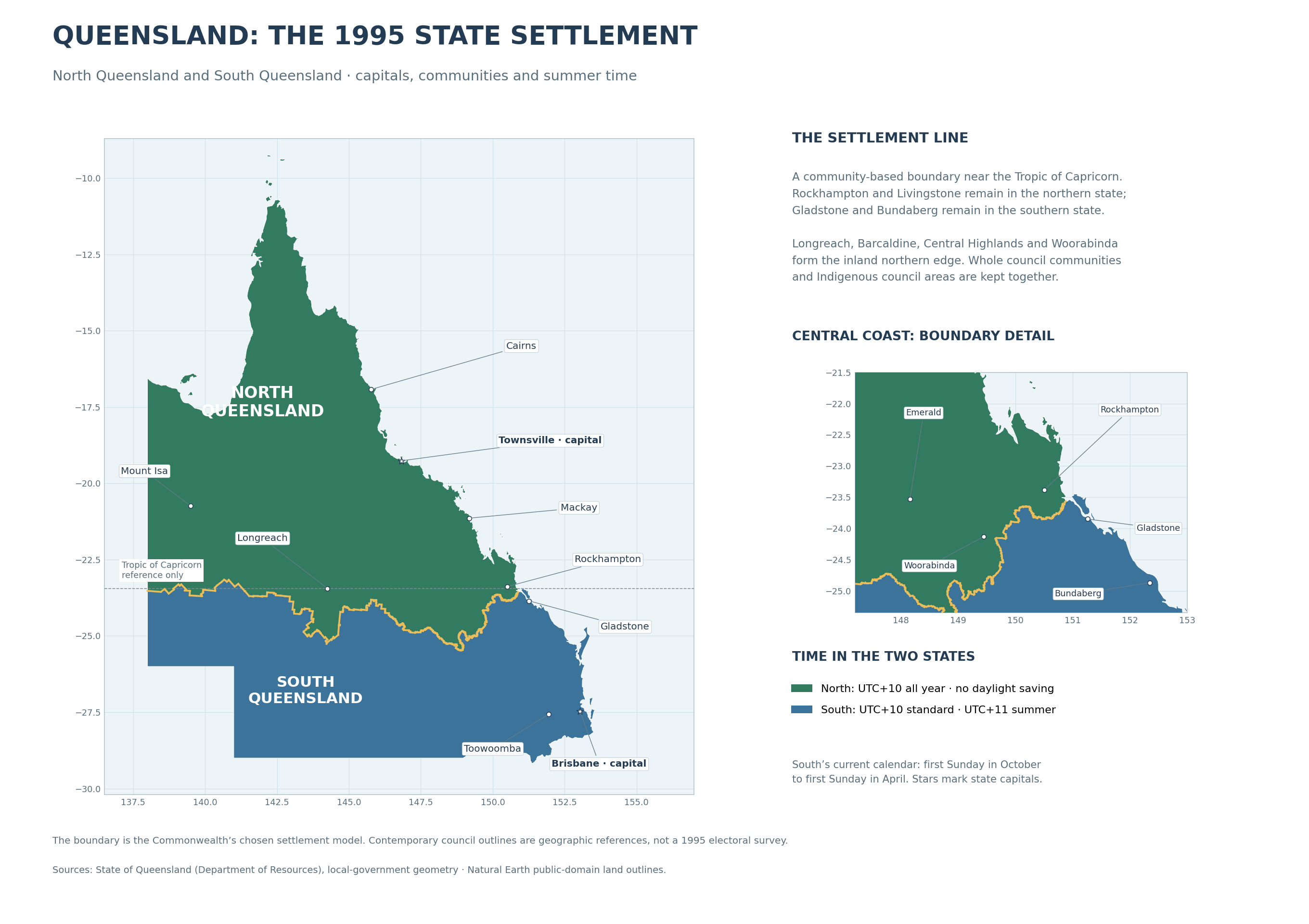
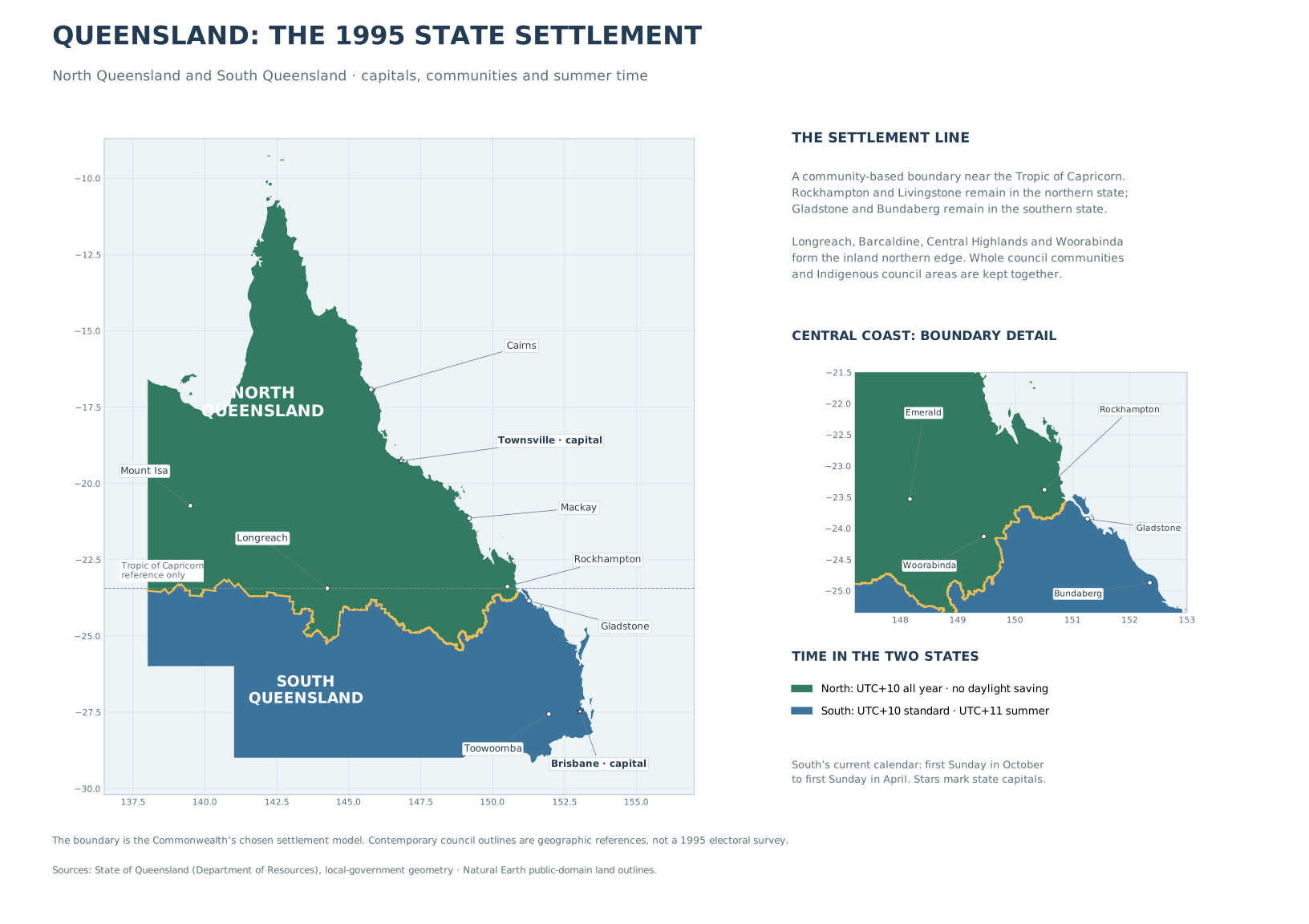
The southern state includes Gladstone, Bundaberg, the Sunshine Coast, Brisbane, the Gold Coast, Toowoomba and the southern/western districts outside the northern settlement. Brisbane remains the capital. Its public-service network is separate from the Townsville-based northern administration.
Civil time
South Queensland uses UTC+10 in standard time and UTC+11 during daylight saving. In the 2026 register its seasonal calendar follows the eastern states, from the first Sunday in October to the first Sunday in April.
Economy and defence
Advanced manufacturing, pharmaceuticals, education, financial services, agriculture and coastal shipping support the southern economy. Brisbane links state institutions, national technical training and the eastern transport network.
Both states retain the national public-education and service-linked adult benefit system. The division changes administrative and parliamentary boundaries, not total Commonwealth population or military establishment. Regional regiments and reserve commands have separate state identities within the Royal Southern Cross Army.
Boundary map
The detailed map uses contemporary official council outlines to draw the adopted settlement. It is a cartographic model for the 1995 national record rather than a reproduction of historical polling districts. The exact constitutional date within 1995 and the referendum vote shares are not assigned.